EU Battery Regulation: Replaceable Batteries, QR Codes and the Deadlines Ahead


From February 18, 2027, two big changes hit products sold in the EU with batteries. First, most products with a built-in portable battery must let the end user remove and replace that battery themselves. Second, every battery must carry a QR code linking to its key information, its EU declaration of conformity and how to dispose of it. That's less than four months away, and for many products it means a design change, not a paperwork update.
Both rules come from the EU Battery Regulation (Regulation (EU) 2023/1542), alongside new battery labels, a digital battery passport for larger batteries, and supply-chain due diligence. They reach far beyond battery makers: if you sell wearables, headphones, speakers, effects pedals, lighting, tools or e-bikes into Europe, they apply to you. And because the regulation applies product by product, a model that's already on sale today must comply for units placed on the market after each deadline.
Here's what the rule requires, which exemptions exist, and what to do in the time that's left.
What the rule requires
Portable batteries must be "readily removable and replaceable by the end user" at any time during the product's life. The Commission's 2025 guidance spells out what that means in practice:
Commonly available tools only. If a tool is needed, it must be one the public can buy. Specialized tools are allowed only if supplied free with the product, and proprietary tools can't be required at all.
No heat or solvents. Batteries glued in place, or that need a heat gun or solvent to release, fail the test.
No damage. Removing and replacing the battery must not damage the battery or the device.
Instructions included. Removal and replacement instructions must come with the product and be available online.
Spare batteries for five years. Replacement batteries must stay available for at least five years after the last unit of the model is placed on the market, at a reasonable and non-discriminatory price.
No parts-pairing. Software may not block or degrade a compatible third-party battery. At most, it can notify the user that the battery isn't original.
Batteries for light means of transport (LMT), such as e-bikes and e-scooters, follow a slightly different rule: they must be replaceable by an independent professional, not necessarily the end user.
The exemptions are narrow
The regulation allows a partial exemption where the battery may be replaced by an independent professional instead of the end user. It doesn't allow a sealed, non-replaceable battery. The exemptions cover:
Appliances used in wet conditions, such as shavers and electric toothbrushes. You must document why user access would compromise safety. An IP rating alone isn't enough.
Certain professional medical devices.
Products needing continuous power for safety or data integrity, such as smoke and CO alarms and memory backup cells, which are fully exempt.
In July 2026 the Commission adopted a delegated act adding six more partial exemptions, including certain sealed or miniaturized wearables, rechargeable electric toys (until July 31, 2030), wireless food thermometer probes and ATEX equipment. It still had to clear review by the European Parliament and Council, so check the final text before relying on it. Even if your product fits, the battery must still be replaceable by a professional.
Smartphones and tablets follow their own rules
You may have seen headlines saying every phone in the EU needs a removable battery from 2027. That's not quite right. Battery replaceability for smartphones and tablets is set by a separate law, the Ecodesign Regulation for smartphones and tablets (Regulation (EU) 2023/1670), which has applied since June 20, 2025. The Commission's guidance treats that product-specific rule as taking precedence over Article 11.
Under the ecodesign rules, a phone or tablet maker can either:
Make the battery user-replaceable, with no tools, supplied tools or basic tools like a screwdriver, or
Make it durable enough to need only a professional repair. To qualify, the battery must keep at least 83% of its rated capacity after 500 full charge cycles and at least 80% after 1,000 cycles, and the device must be rated at least IP67 for dust and water.
If the device takes the second route, spare batteries must still be available to professional repairers. Phone and tablet makers must also supply spare batteries to owners and professional repairers for seven years after a model leaves the EU market, longer than the five years Article 11 requires for other products. Most current flagship phones appear to meet the durability route, so the February 2027 date won't by itself force removable batteries in phones.
The Commission hasn't issued a formal clarification on how the two laws interact for phones, so treat this as the prevailing reading, not settled law. And the carve-out covers only smartphones and tablets. Earbuds, smartwatches, speakers and other electronics are still covered by Article 11.
Example: a bluetooth speaker with soldered-in lithium-ion battery
Take a rechargeable Bluetooth speaker, or a wireless guitar transmitter, with a lithium-ion cell whose leads are soldered straight to the main circuit board. To replace it, a user would have to open the housing, desolder the old cell and solder in a new one.
That almost certainly fails Article 11. Desoldering uses heat, which the regulation rules out, and the guidance treats the end user as an adult with no specific knowledge or qualifications in battery replacement. A soldering iron and the skill to use it on a lithium cell don't fit that description.
Would a crimp kit from the manufacturer work? It's tempting: cut the old leads, then crimp the new battery on with supplied connectors. I wouldn't rely on it:
Cutting the leads arguably damages the product, and the replacement must not damage the battery or the device.
A crimp tool is a specialized tool, so you'd have to supply it free, and getting a reliable crimp still takes skill.
An end user splicing lithium-ion leads by hand risks a short circuit or a bad joint that overheats. The replacement must not compromise safety.
There's no official ruling on crimp kits yet, but a market surveillance authority is likely to see one as a workaround, not a removable battery.
The safer fix: put a keyed plug-in connector between the cell and the board, and give users access through a battery door or a few standard screws. The battery then unplugs and plugs back in with no cutting, heat or special tools. For a product already in production, that's often a small change to the board and housing, and much cheaper than a stop-sale.
The other battery deadlines
The replaceability rule is one piece of a regulation that phases in over several years. The QR code requirement lands on the same day, so most teams will tackle both together.

Labels: harmonized labels showing capacity, chemistry and hazardous substances are due from August 18, 2026, or 18 months after the Commission's labeling implementing act takes effect, whichever is later. That act was delayed, so expect the real labeling date to slip past August 2026. Unlike labels, the QR code date is fixed and doesn't wait on the implementing act.
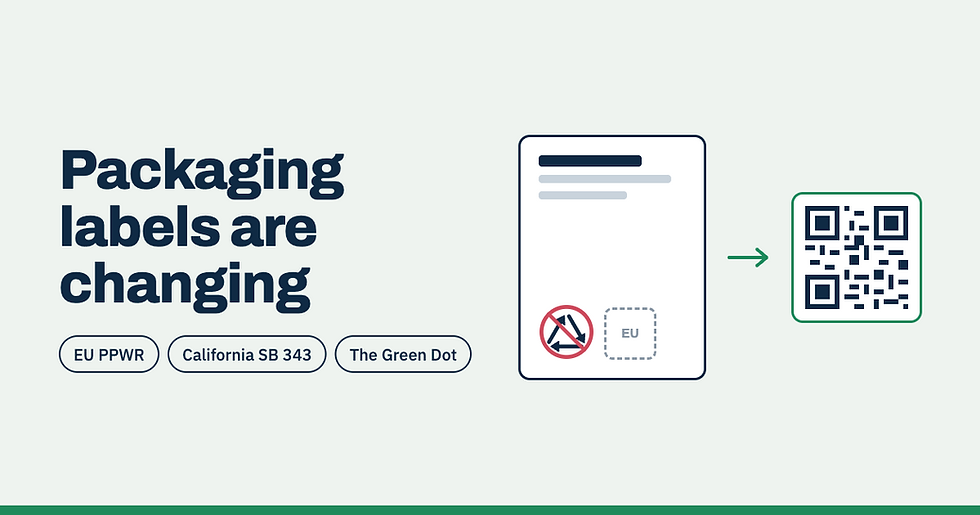
QR code and battery passport: from February 18, 2027, every battery needs a QR code linking to its information and declaration of conformity. EV, LMT and industrial batteries over 2 kWh also need a digital battery passport.
Due diligence: postponed to August 18, 2027, for companies with net turnover above €40 million. Further changes have been proposed but not adopted.
Recycled content: disclosure starts August 18, 2028, for EV, SLI and certain industrial batteries, and later for LMT batteries.
Who's most affected
The products hit hardest are compact devices where the battery is glued in, soldered or sealed to keep the product slim or water-resistant:
Wearables and audio: fitness bands, smartwatches, earbuds, headphones and portable speakers. Some sealed wearables may qualify for the new exemption, but only with documented reasons.
Music gear: wireless pedals, rechargeable effects and amplifiers, wireless guitar systems and portable recorders with internal lithium cells.
Lighting: rechargeable lamps, flashlights, work lights and solar garden lights.
Tools and outdoor equipment: most use swappable packs already, but check smaller cordless products with built-in cells.
E-bikes and scooters: LMT batteries need professional replaceability, compatible spare batteries and no software lock-out.
If the battery is held in by adhesive, tamper-proof screws, or a housing that has to be pried apart, plan for a redesign.
What to do now
With less than four months left, prioritize by EU sales volume and how hard the redesign is.
Inventory your products. List every product sold in the EU with a built-in battery. Note how the battery is attached and what it takes to remove it.
Run the removal test. Can an ordinary user swap the battery with common tools, no heat, no solvents and no damage? If not, flag the product.
Check the exemptions honestly. If you plan to rely on one, write down the technical reasons now. Regulators expect a documented justification, not an assumption.
Plan the fixes. That might mean a battery door, screws instead of adhesive, or a standard cell format. For products that can't change in time, decide whether to build EU stock before the deadline or pause EU sales.
Line up spare parts and instructions. Set up five-year spare battery supply and write user-facing removal instructions for the manual and your website.
Review your firmware. Remove any battery-pairing checks that block or degrade compatible replacements.
Don't forget the QR code and labels. The new labeling and QR code rules land around the same time, so handle them in the same design cycle.
Need help working out which of your products are affected, or documenting an exemption? Book a free consult with Product Compliance Simplified.
This article is for general information only and reflects requirements as of date of publish. It isn’t legal advice, and regulations change. Before making product or compliance decisions, confirm the current requirements with the relevant authority, a notified body, or a qualified professional.


Comments